Buy istitutoaltierospinelli.eu ?
We are moving the project
istitutoaltierospinelli.eu .
Are you interested in purchasing the domain
istitutoaltierospinelli.eu ?
domain@kv-gmbh.de · 0541-91531010
Buy istitutoaltierospinelli.eu ?
Don't you like dialects?
I do not have personal preferences or feelings, as I am an artificial intelligence. However, I can appreciate the diversity and richness that dialects bring to language. Dialects often reflect the unique cultural and regional identities of communities, adding depth and variety to communication. Embracing dialects can also help foster understanding and appreciation for different ways of speaking. **
What are Albanian dialects?
Albanian dialects are regional varieties of the Albanian language spoken in different parts of Albania, Kosovo, North Macedonia, and other Albanian-speaking regions. These dialects can vary in terms of vocabulary, pronunciation, and grammar, but they are all mutually intelligible. The two main dialect groups are Gheg, spoken in the north, and Tosk, spoken in the south, with the standard Albanian language based on the Tosk dialect. **

Similar search terms for Dialects
Top-Angebote
Products related to Dialects:
-
Tiny Tots Teens Trends Drawer Game Early Education Montessori Wooden Pitch Ball Box Preschool Learning Training Toy Drawer Game Early Education Montessori Wooden Pitch Ball Box Preschool Learning Training ToyThis Montessori Wooden Pitch Ball Box Drawer Game is a thoughtfully designed earlyeducation toy that transforms playtime into purposeful learning. Crafted for toddlers and preschoolers, it offers a handson, engaging way to support key developmental...39,97 $*Shipping: 0,00 $Secure redirect to the provider
-
Tiny Tots Teens Trends Montessori Baby Training, Infant Puzzle Early Education Toys, Busy Hand Grasping Ball For Baby Montessori Baby Training, Infant Puzzle Early Education Toys, Busy Hand Grasping Ball For BabyIntroduce Your Baby to the World of Learning The Infant Puzzle Early Education Toys are designed to foster cognitive and physical development in your little one. This Multifunctional Busy Ball for Montessori Baby Training is ideal for enhancing...79,97 $*Shipping: 0,00 $Secure redirect to the provider
-
Modern Mode Marketplace Brain Response Battle Cup Set Fun Baby Stack Game For Early Education, Speed And HandEye Coordination Training Brain Response Battle Cup Set Fun Baby Stack Game For Early Education, Speed And HandEye Coordination TrainingUnlock your child's potential with the Brain Response Battle Cup Set! Perfect for young learners, this exciting game combines fun and education to develop handeye coordination and response speed. Ideal for babies and toddlers, it helps improve...29,97 $*Shipping: 0,00 $Secure redirect to the provider




-
What are Bavarian dialects?
Bavarian dialects are a group of Upper German dialects spoken in the Bavaria region of Germany, as well as in parts of Austria and South Tyrol. These dialects are characterized by their distinct pronunciation, vocabulary, and grammar, which set them apart from standard German. Bavarian dialects are an important part of the cultural identity of the region and are still spoken by many people, particularly in rural areas. They are also used in literature, music, and theater, contributing to the rich cultural heritage of Bavaria. **
-
What are German dialects?
German dialects are regional variations of the German language that differ in pronunciation, vocabulary, and grammar. These dialects are spoken in different regions of Germany, as well as in neighboring countries such as Austria and Switzerland. Some dialects are so distinct that they are almost unintelligible to speakers of standard German. Despite efforts to promote standard German as the official language, many people still use and take pride in speaking their local dialects. **
-
How do dialects originate?
Dialects originate from the natural evolution of language within a specific geographical or social community. As people interact and communicate within their community, they develop unique pronunciations, vocabulary, and grammar patterns that distinguish their speech from others. Over time, these linguistic differences become more pronounced and form distinct dialects. Factors such as isolation, migration, and historical events can also contribute to the development of dialects. **
-
Why are dialects being eradicated?
Dialects are being eradicated due to various factors such as globalization, urbanization, and the spread of mass media. As people move to urban areas and interact with a more diverse population, there is a tendency for dialects to be replaced by a more standardized form of language. Additionally, the influence of mass media, particularly through television and the internet, can lead to the homogenization of language as people are exposed to a more uniform way of speaking. Overall, the decline of dialects can be seen as a result of societal changes that prioritize communication and understanding across different regions. **


Does God not understand dialects?
God is often believed to be all-knowing and all-powerful, so it is commonly thought that God would understand all dialects and languages. However, the concept of God's understanding of dialects may vary depending on different religious beliefs and interpretations. Some may argue that God's understanding transcends language barriers, while others may believe that God communicates in a specific language or dialect. Ultimately, the understanding of God's comprehension of dialects is a matter of personal faith and interpretation. **
How can one study dialects?
One can study dialects through various methods such as conducting fieldwork in specific regions to collect data on language usage, interviewing native speakers to understand their linguistic patterns, and analyzing written texts or recordings to identify distinct dialectal features. Additionally, studying the historical and social context of a region can provide insight into the development and evolution of its dialect. Utilizing linguistic tools and software can also aid in analyzing phonological, morphological, and syntactic differences between dialects. Overall, a comprehensive study of dialects involves a combination of empirical research, data collection, and linguistic analysis. **
Top-Angebote
Products related to Dialects:
-
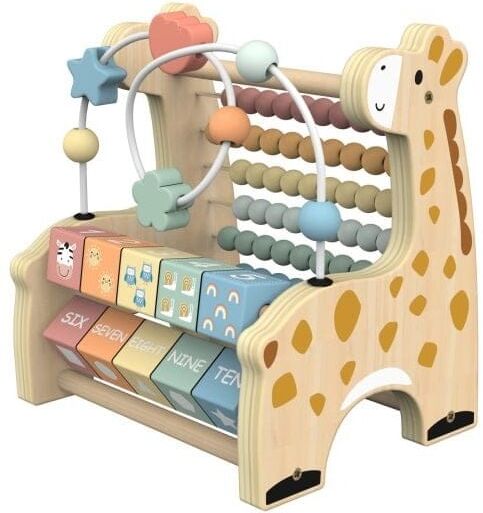
Tooky Toys Wooden Learning Giraffe - Early Education Toy for Babies - Develops Problem-Solving Skills and Hand-Eye CoordinationThe Learning Giraffe is a delightful way for little ones to discover numbers, counting, and colors. Made from smooth, durable wood, this giraffe-shaped learning board combines early education with playful charm. Kids can engage in hands-on activities, such as sliding and stacking numbers, to make math feel approachable and fun. The sturdy, natural materials help develop problem-solving skills and hand-eye coordination. The Learning Giraffe is a gentle guide into the world of numbers, perfect for practicing simple sums and exploring colorful blocks. Tooky Toys has crafted a product that brings the classroom into the playroom in a fun and imaginative way.19,39 £*Shipping: 1,99 £Secure redirect to the provider
-
Uplifted Finds Interactive Ring Toss Training System Professional Early Education & Pediatric Fitness Infrastructure Interactive Ring Toss Training System Professional Early Education & Pediatric Fitness InfrastructureCommand ultimate developmental confidence with the Interactive Ring Toss Training System, a highperformance educational solution specifically engineered to act as a comprehensive tool for elite organization and superior technical ergonomics. Built...52,97 $*Shipping: 0,00 $Secure redirect to the provider
-
Tiny Tots Teens Trends Drawer Game Early Education Montessori Wooden Pitch Ball Box Preschool Learning Training Toy Drawer Game Early Education Montessori Wooden Pitch Ball Box Preschool Learning Training ToyThis Montessori Wooden Pitch Ball Box Drawer Game is a thoughtfully designed earlyeducation toy that transforms playtime into purposeful learning. Crafted for toddlers and preschoolers, it offers a handson, engaging way to support key developmental...39,97 $*Shipping: 0,00 $Secure redirect to the provider
-
Tiny Tots Teens Trends Montessori Baby Training, Infant Puzzle Early Education Toys, Busy Hand Grasping Ball For Baby Montessori Baby Training, Infant Puzzle Early Education Toys, Busy Hand Grasping Ball For BabyIntroduce Your Baby to the World of Learning The Infant Puzzle Early Education Toys are designed to foster cognitive and physical development in your little one. This Multifunctional Busy Ball for Montessori Baby Training is ideal for enhancing...79,97 $*Shipping: 0,00 $Secure redirect to the provider
-
Don't you like dialects?
I do not have personal preferences or feelings, as I am an artificial intelligence. However, I can appreciate the diversity and richness that dialects bring to language. Dialects often reflect the unique cultural and regional identities of communities, adding depth and variety to communication. Embracing dialects can also help foster understanding and appreciation for different ways of speaking. **
-
What are Albanian dialects?
Albanian dialects are regional varieties of the Albanian language spoken in different parts of Albania, Kosovo, North Macedonia, and other Albanian-speaking regions. These dialects can vary in terms of vocabulary, pronunciation, and grammar, but they are all mutually intelligible. The two main dialect groups are Gheg, spoken in the north, and Tosk, spoken in the south, with the standard Albanian language based on the Tosk dialect. **
-
What are Bavarian dialects?
Bavarian dialects are a group of Upper German dialects spoken in the Bavaria region of Germany, as well as in parts of Austria and South Tyrol. These dialects are characterized by their distinct pronunciation, vocabulary, and grammar, which set them apart from standard German. Bavarian dialects are an important part of the cultural identity of the region and are still spoken by many people, particularly in rural areas. They are also used in literature, music, and theater, contributing to the rich cultural heritage of Bavaria. **
-
What are German dialects?
German dialects are regional variations of the German language that differ in pronunciation, vocabulary, and grammar. These dialects are spoken in different regions of Germany, as well as in neighboring countries such as Austria and Switzerland. Some dialects are so distinct that they are almost unintelligible to speakers of standard German. Despite efforts to promote standard German as the official language, many people still use and take pride in speaking their local dialects. **
Similar search terms for Dialects
-
Modern Mode Marketplace Brain Response Battle Cup Set Fun Baby Stack Game For Early Education, Speed And HandEye Coordination Training Brain Response Battle Cup Set Fun Baby Stack Game For Early Education, Speed And HandEye Coordination TrainingUnlock your child's potential with the Brain Response Battle Cup Set! Perfect for young learners, this exciting game combines fun and education to develop handeye coordination and response speed. Ideal for babies and toddlers, it helps improve...29,97 $*Shipping: 0,00 $Secure redirect to the provider
-
Inspire Select Wooden Montessori Fishing Toy Set Kids Number & Alphabet Learning Game For Early Education Training numbersMake learning fun and interactive with a playful educational experience. This Montessori fishing toy helps children develop essential skills while enjoying handson play. Designed for toddlers and young kids, this wooden learning toy combines...64,96 $*Shipping: 0,00 $Secure redirect to the provider
-
Multisell Products Hub Magnetic Maze Walking Ball, Children's Early Education Puzzle, Baby Concentration And Logic Thinking Training mediumImprove Concentration with Fun Learning: Introducing the Children's Magnetic Maze Walking Ball, an engaging tool that fosters your childs concentration and cognitive skills. This interactive game is designed to help develop logic thinking while...27,97 $*Shipping: 0,00 $Secure redirect to the provider
-
How do dialects originate?
Dialects originate from the natural evolution of language within a specific geographical or social community. As people interact and communicate within their community, they develop unique pronunciations, vocabulary, and grammar patterns that distinguish their speech from others. Over time, these linguistic differences become more pronounced and form distinct dialects. Factors such as isolation, migration, and historical events can also contribute to the development of dialects. **
-
Why are dialects being eradicated?
Dialects are being eradicated due to various factors such as globalization, urbanization, and the spread of mass media. As people move to urban areas and interact with a more diverse population, there is a tendency for dialects to be replaced by a more standardized form of language. Additionally, the influence of mass media, particularly through television and the internet, can lead to the homogenization of language as people are exposed to a more uniform way of speaking. Overall, the decline of dialects can be seen as a result of societal changes that prioritize communication and understanding across different regions. **
-
Does God not understand dialects?
God is often believed to be all-knowing and all-powerful, so it is commonly thought that God would understand all dialects and languages. However, the concept of God's understanding of dialects may vary depending on different religious beliefs and interpretations. Some may argue that God's understanding transcends language barriers, while others may believe that God communicates in a specific language or dialect. Ultimately, the understanding of God's comprehension of dialects is a matter of personal faith and interpretation. **
-
How can one study dialects?
One can study dialects through various methods such as conducting fieldwork in specific regions to collect data on language usage, interviewing native speakers to understand their linguistic patterns, and analyzing written texts or recordings to identify distinct dialectal features. Additionally, studying the historical and social context of a region can provide insight into the development and evolution of its dialect. Utilizing linguistic tools and software can also aid in analyzing phonological, morphological, and syntactic differences between dialects. Overall, a comprehensive study of dialects involves a combination of empirical research, data collection, and linguistic analysis. **
* All prices are inclusive of VAT and, if applicable, plus shipping costs. The offer information is based on the details provided by the respective shop and is updated through automated processes. Real-time updates do not occur, so deviations can occur in individual cases. ** Note: Parts of this content were created by AI.