Buy istitutoaltierospinelli.eu ?
We are moving the project
istitutoaltierospinelli.eu .
Are you interested in purchasing the domain
istitutoaltierospinelli.eu ?
domain@kv-gmbh.de · 0541-91531010
Buy istitutoaltierospinelli.eu ?
What are binomial distributions?
Binomial distributions are a type of probability distribution that describes the number of successes in a fixed number of independent trials, where each trial has the same probability of success. The distribution is characterized by two parameters: the number of trials and the probability of success on each trial. The outcomes of a binomial distribution are binary, meaning they can only result in success or failure. Binomial distributions are commonly used in statistics to model various real-world scenarios, such as coin flips, medical trials, and quality control processes. **
What are probability distributions?
Probability distributions are mathematical functions that describe the likelihood of different outcomes or events. They can be used to model the uncertainty or randomness in a given situation, such as the likelihood of rolling a certain number on a die or the distribution of heights in a population. Probability distributions can be discrete, where the outcomes are distinct and separate, or continuous, where the outcomes can take any value within a certain range. Common examples of probability distributions include the normal distribution, binomial distribution, and uniform distribution. **

Similar search terms for Distributions
Top-Angebote
Products related to Distributions:
-
Tiny Tots Teens Trends Montessori Baby Training, Infant Puzzle Early Education Toys, Busy Hand Grasping Ball For Baby Montessori Baby Training, Infant Puzzle Early Education Toys, Busy Hand Grasping Ball For BabyIntroduce Your Baby to the World of Learning The Infant Puzzle Early Education Toys are designed to foster cognitive and physical development in your little one. This Multifunctional Busy Ball for Montessori Baby Training is ideal for enhancing...79,97 $*Shipping: 0,00 $Secure redirect to the provider
-
Modern Mode Marketplace Brain Response Battle Cup Set Fun Baby Stack Game For Early Education, Speed And HandEye Coordination Training Brain Response Battle Cup Set Fun Baby Stack Game For Early Education, Speed And HandEye Coordination TrainingUnlock your child's potential with the Brain Response Battle Cup Set! Perfect for young learners, this exciting game combines fun and education to develop handeye coordination and response speed. Ideal for babies and toddlers, it helps improve...29,97 $*Shipping: 0,00 $Secure redirect to the provider
-
Inspire Select Wooden Montessori Fishing Toy Set Kids Number & Alphabet Learning Game For Early Education Training numbersMake learning fun and interactive with a playful educational experience. This Montessori fishing toy helps children develop essential skills while enjoying handson play. Designed for toddlers and young kids, this wooden learning toy combines...64,96 $*Shipping: 0,00 $Secure redirect to the provider
-
PrecisionPLAY Skills Trainer Ramp RebounderPrecisionPLAY Skills Trainer Ramp Rebounder packs several training options into one setup. The angled ramp sends the ball back at different heights and angles. Good for control, volleys and quick reactions.Behind the ramp, a rebound board returns passes straight to your feet. In the centre, a...129,95 £*Shipping: 0,00 £Secure redirect to the provider




-
Which Linux distributions are good?
There are many good Linux distributions, each with its own strengths and target audience. Some popular choices include Ubuntu, which is known for its user-friendly interface and large community support; Fedora, which is known for its cutting-edge features and focus on open source software; and CentOS, which is known for its stability and use in server environments. Ultimately, the best distribution for you will depend on your specific needs and preferences. **
-
What are skewness of distributions?
Skewness is a measure of the asymmetry of a distribution. It indicates whether the data is concentrated more on one side of the mean than the other. A positively skewed distribution has a longer right tail, meaning that there are more extreme values on the right side of the distribution. Conversely, a negatively skewed distribution has a longer left tail, indicating more extreme values on the left side. Skewness is an important measure in statistics as it helps to understand the shape and behavior of a dataset. **
-
What are examples of symmetric distributions?
Some examples of symmetric distributions include the normal distribution, the uniform distribution, and the t-distribution with an even number of degrees of freedom. In these distributions, the shape of the probability density function is the same on both sides of the mean, resulting in a symmetrical appearance. This means that the probability of observing a value to the left or right of the mean is the same, making these distributions symmetric. **
-
How do you calculate binomial distributions?
To calculate binomial distributions, you need to know the probability of success (p), the number of trials (n), and the number of successes you are interested in (k). The formula to calculate the probability of getting exactly k successes in n trials is P(X = k) = (n choose k) * p^k * (1-p)^(n-k), where (n choose k) is the number of ways to choose k successes out of n trials. You can use this formula to calculate the probability of different numbers of successes in a binomial distribution. **


Which Linux distributions are suitable for programmers?
Linux distributions that are popular among programmers include Ubuntu, Fedora, and Debian. These distributions come with a wide range of development tools and libraries pre-installed, making it easier for programmers to start coding without having to set up their development environment from scratch. Additionally, these distributions have strong community support, which can be helpful when seeking assistance or troubleshooting programming issues. Ultimately, the best Linux distribution for a programmer will depend on their specific needs and preferences. **
How are binomial distributions represented in diagrams?
Binomial distributions are often represented in diagrams using bar graphs or histograms. The x-axis of the graph represents the number of successes in a fixed number of trials, while the y-axis represents the probability of obtaining that number of successes. Each bar on the graph represents the probability of obtaining a specific number of successes in the given number of trials. This visual representation helps to illustrate the probability distribution of a binomial random variable. **
Top-Angebote
Products related to Distributions:
-
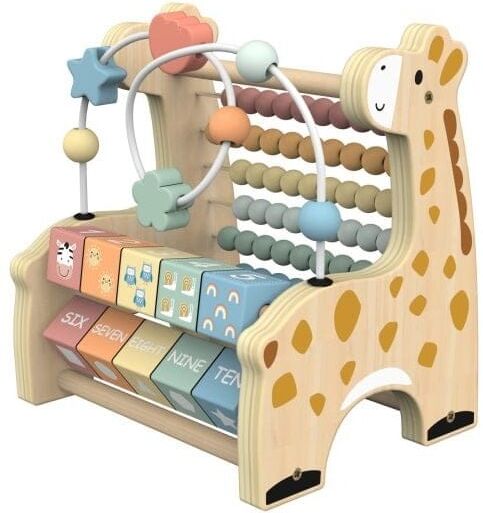
Tooky Toys Wooden Learning Giraffe - Early Education Toy for Babies - Develops Problem-Solving Skills and Hand-Eye CoordinationThe Learning Giraffe is a delightful way for little ones to discover numbers, counting, and colors. Made from smooth, durable wood, this giraffe-shaped learning board combines early education with playful charm. Kids can engage in hands-on activities, such as sliding and stacking numbers, to make math feel approachable and fun. The sturdy, natural materials help develop problem-solving skills and hand-eye coordination. The Learning Giraffe is a gentle guide into the world of numbers, perfect for practicing simple sums and exploring colorful blocks.17,89 £*Shipping: 3,95 £Secure redirect to the provider
-
Tiny Tots Teens Trends Drawer Game Early Education Montessori Wooden Pitch Ball Box Preschool Learning Training Toy Drawer Game Early Education Montessori Wooden Pitch Ball Box Preschool Learning Training ToyThis Montessori Wooden Pitch Ball Box Drawer Game is a thoughtfully designed earlyeducation toy that transforms playtime into purposeful learning. Crafted for toddlers and preschoolers, it offers a handson, engaging way to support key developmental...39,97 $*Shipping: 0,00 $Secure redirect to the provider
-
Tiny Tots Teens Trends Montessori Baby Training, Infant Puzzle Early Education Toys, Busy Hand Grasping Ball For Baby Montessori Baby Training, Infant Puzzle Early Education Toys, Busy Hand Grasping Ball For BabyIntroduce Your Baby to the World of Learning The Infant Puzzle Early Education Toys are designed to foster cognitive and physical development in your little one. This Multifunctional Busy Ball for Montessori Baby Training is ideal for enhancing...79,97 $*Shipping: 0,00 $Secure redirect to the provider
-
Modern Mode Marketplace Brain Response Battle Cup Set Fun Baby Stack Game For Early Education, Speed And HandEye Coordination Training Brain Response Battle Cup Set Fun Baby Stack Game For Early Education, Speed And HandEye Coordination TrainingUnlock your child's potential with the Brain Response Battle Cup Set! Perfect for young learners, this exciting game combines fun and education to develop handeye coordination and response speed. Ideal for babies and toddlers, it helps improve...29,97 $*Shipping: 0,00 $Secure redirect to the provider
-
What are binomial distributions?
Binomial distributions are a type of probability distribution that describes the number of successes in a fixed number of independent trials, where each trial has the same probability of success. The distribution is characterized by two parameters: the number of trials and the probability of success on each trial. The outcomes of a binomial distribution are binary, meaning they can only result in success or failure. Binomial distributions are commonly used in statistics to model various real-world scenarios, such as coin flips, medical trials, and quality control processes. **
-
What are probability distributions?
Probability distributions are mathematical functions that describe the likelihood of different outcomes or events. They can be used to model the uncertainty or randomness in a given situation, such as the likelihood of rolling a certain number on a die or the distribution of heights in a population. Probability distributions can be discrete, where the outcomes are distinct and separate, or continuous, where the outcomes can take any value within a certain range. Common examples of probability distributions include the normal distribution, binomial distribution, and uniform distribution. **
-
Which Linux distributions are good?
There are many good Linux distributions, each with its own strengths and target audience. Some popular choices include Ubuntu, which is known for its user-friendly interface and large community support; Fedora, which is known for its cutting-edge features and focus on open source software; and CentOS, which is known for its stability and use in server environments. Ultimately, the best distribution for you will depend on your specific needs and preferences. **
-
What are skewness of distributions?
Skewness is a measure of the asymmetry of a distribution. It indicates whether the data is concentrated more on one side of the mean than the other. A positively skewed distribution has a longer right tail, meaning that there are more extreme values on the right side of the distribution. Conversely, a negatively skewed distribution has a longer left tail, indicating more extreme values on the left side. Skewness is an important measure in statistics as it helps to understand the shape and behavior of a dataset. **
Similar search terms for Distributions
-
Inspire Select Wooden Montessori Fishing Toy Set Kids Number & Alphabet Learning Game For Early Education Training numbersMake learning fun and interactive with a playful educational experience. This Montessori fishing toy helps children develop essential skills while enjoying handson play. Designed for toddlers and young kids, this wooden learning toy combines...64,96 $*Shipping: 0,00 $Secure redirect to the provider
-
PrecisionPLAY Skills Trainer Ramp RebounderPrecisionPLAY Skills Trainer Ramp Rebounder packs several training options into one setup. The angled ramp sends the ball back at different heights and angles. Good for control, volleys and quick reactions.Behind the ramp, a rebound board returns passes straight to your feet. In the centre, a...129,95 £*Shipping: 0,00 £Secure redirect to the provider
-
Multisell Products Hub Magnetic Maze Walking Ball, Children's Early Education Puzzle, Baby Concentration And Logic Thinking Training mediumImprove Concentration with Fun Learning: Introducing the Children's Magnetic Maze Walking Ball, an engaging tool that fosters your childs concentration and cognitive skills. This interactive game is designed to help develop logic thinking while...27,97 $*Shipping: 0,00 $Secure redirect to the provider
-
Football Flick Urban Skills Training Rebounder and Net Black & Orange 75cm H X 80cm W X 120cm DThe Flick Urban Skills Trainer is the number one piece of equipment you need for your garden or football club. The unique design is scientifically proven to improve your core skills by up to 73%. Pass the ball to the front ramp and watch the ball come back to you at different heights and angles. Use the rebounder net on the reverse side to improve your touch and control or use the net in the middle of the trainer as a target to help your accuracy. The tunnel that runs through the rebounder ensures your passing improves over time. The Urban skills trainer has been designed to be used individually but has also helped hundreds of football coaches develop players at academy and professional level. The double sided rebounder is perfect for players of all abilities and provides the perfect mixture of training and fun. When you’re finished with your Skills Trainer, simply fold it down flat and store it in its very own carry bag. Brand Name: Football Flick.126,74 £*Shipping: 0,00 £Secure redirect to the provider
-
What are examples of symmetric distributions?
Some examples of symmetric distributions include the normal distribution, the uniform distribution, and the t-distribution with an even number of degrees of freedom. In these distributions, the shape of the probability density function is the same on both sides of the mean, resulting in a symmetrical appearance. This means that the probability of observing a value to the left or right of the mean is the same, making these distributions symmetric. **
-
How do you calculate binomial distributions?
To calculate binomial distributions, you need to know the probability of success (p), the number of trials (n), and the number of successes you are interested in (k). The formula to calculate the probability of getting exactly k successes in n trials is P(X = k) = (n choose k) * p^k * (1-p)^(n-k), where (n choose k) is the number of ways to choose k successes out of n trials. You can use this formula to calculate the probability of different numbers of successes in a binomial distribution. **
-
Which Linux distributions are suitable for programmers?
Linux distributions that are popular among programmers include Ubuntu, Fedora, and Debian. These distributions come with a wide range of development tools and libraries pre-installed, making it easier for programmers to start coding without having to set up their development environment from scratch. Additionally, these distributions have strong community support, which can be helpful when seeking assistance or troubleshooting programming issues. Ultimately, the best Linux distribution for a programmer will depend on their specific needs and preferences. **
-
How are binomial distributions represented in diagrams?
Binomial distributions are often represented in diagrams using bar graphs or histograms. The x-axis of the graph represents the number of successes in a fixed number of trials, while the y-axis represents the probability of obtaining that number of successes. Each bar on the graph represents the probability of obtaining a specific number of successes in the given number of trials. This visual representation helps to illustrate the probability distribution of a binomial random variable. **
* All prices are inclusive of VAT and, if applicable, plus shipping costs. The offer information is based on the details provided by the respective shop and is updated through automated processes. Real-time updates do not occur, so deviations can occur in individual cases. ** Note: Parts of this content were created by AI.