Buy istitutoaltierospinelli.eu ?
We are moving the project
istitutoaltierospinelli.eu .
Are you interested in purchasing the domain
istitutoaltierospinelli.eu ?
domain@kv-gmbh.de · 0541-91531010
Buy istitutoaltierospinelli.eu ?
What relations are equivalence relations?
Equivalence relations are relations that satisfy three properties: reflexivity, symmetry, and transitivity. Reflexivity means that every element is related to itself. Symmetry means that if one element is related to another, then the other is related to the first. Transitivity means that if one element is related to another and the second element is related to a third, then the first element is related to the third. Relations that satisfy these three properties are considered equivalence relations. Examples of equivalence relations include "is equal to" and "has the same birthday as." **
What are Byzantine relations?
Byzantine relations refer to the diplomatic, political, and cultural interactions between the Byzantine Empire and other states or entities. These relations were crucial for the Byzantine Empire's survival and influence, as they involved alliances, treaties, trade agreements, and military cooperation with neighboring powers such as the Roman Empire, Persia, Arab Caliphates, and various European kingdoms. Byzantine relations also involved religious and cultural exchanges, as the Byzantine Empire played a significant role in spreading Christianity and preserving classical knowledge. These relations were often complex and constantly evolving, shaping the empire's foreign policy and its place in the wider world. **
Similar search terms for Relations
Top-Angebote
Products related to Relations:
-
Tiny Tots Teens Trends Drawer Game Early Education Montessori Wooden Pitch Ball Box Preschool Learning Training Toy Drawer Game Early Education Montessori Wooden Pitch Ball Box Preschool Learning Training ToyThis Montessori Wooden Pitch Ball Box Drawer Game is a thoughtfully designed earlyeducation toy that transforms playtime into purposeful learning. Crafted for toddlers and preschoolers, it offers a handson, engaging way to support key developmental...39,97 $*Shipping: 0,00 $Secure redirect to the provider
-
Tiny Tots Teens Trends Montessori Baby Training, Infant Puzzle Early Education Toys, Busy Hand Grasping Ball For Baby Montessori Baby Training, Infant Puzzle Early Education Toys, Busy Hand Grasping Ball For BabyIntroduce Your Baby to the World of Learning The Infant Puzzle Early Education Toys are designed to foster cognitive and physical development in your little one. This Multifunctional Busy Ball for Montessori Baby Training is ideal for enhancing...79,97 $*Shipping: 0,00 $Secure redirect to the provider
-
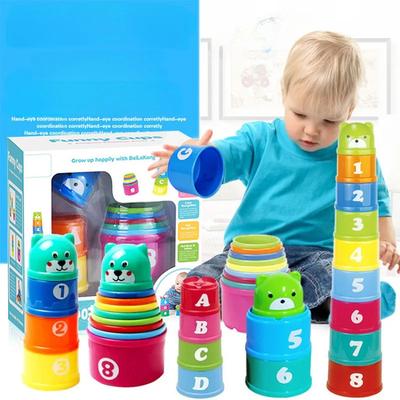
Modern Mode Marketplace Brain Response Battle Cup Set Fun Baby Stack Game For Early Education, Speed And HandEye Coordination Training Brain Response Battle Cup Set Fun Baby Stack Game For Early Education, Speed And HandEye Coordination TrainingUnlock your child's potential with the Brain Response Battle Cup Set! Perfect for young learners, this exciting game combines fun and education to develop handeye coordination and response speed. Ideal for babies and toddlers, it helps improve...29,97 $*Shipping: 0,00 $Secure redirect to the provider



-
What are equivalence relations?
Equivalence relations are a type of relation between elements of a set that satisfy three properties: reflexivity, symmetry, and transitivity. Reflexivity means that every element is related to itself. Symmetry means that if one element is related to another, then the other is related to the first. Transitivity means that if one element is related to a second, and the second is related to a third, then the first is related to the third. Equivalence relations are important in mathematics and other fields because they allow us to classify elements of a set into distinct equivalence classes based on their relationships with each other. **
-
What are real societal relations?
Real societal relations refer to the interactions, connections, and dynamics that exist among individuals, groups, and institutions within a society. These relations are shaped by various factors such as power dynamics, cultural norms, economic structures, and historical contexts. They influence how people relate to each other, how resources are distributed, and how social hierarchies are maintained or challenged. Understanding real societal relations is crucial for analyzing social issues, promoting social justice, and fostering positive social change. **
-
Why are the relations symmetric?
Relations are symmetric when for every pair of elements (a, b) in the relation, if (a, b) is in the relation, then (b, a) is also in the relation. This means that the relation is bidirectional, and both elements are related to each other in the same way. Symmetric relations are important because they represent a balanced and mutual connection between elements, where the relationship between them is not one-sided. This property is useful in various mathematical and real-world applications, such as in modeling social networks, communication systems, and equivalence relations. **
-
What are entities and relations?
Entities are objects or concepts that are distinguishable and can be described. They can be people, places, things, or events. Relations, on the other hand, are connections or associations between entities. They define how entities are related to each other and provide context to their interactions. In a database context, entities are represented as tables and relations are represented as the connections between these tables. **
How many relations are there?
The number of relations depends on the context in which the term is being used. In mathematics, a relation between two sets is a collection of ordered pairs, and the number of relations between two finite sets of sizes m and n is 2^(m*n). In a social or personal context, the number of relations could refer to the number of connections or interactions between individuals, which would vary widely depending on the size and complexity of the social network. Therefore, the number of relations can vary greatly depending on the specific context in which the term is being used. **
What are order relations mxn?
Order relations mxn are a type of binary relation that is defined on two sets, typically denoted as M and N. In this context, "m" and "n" represent elements of the sets M and N, respectively. The order relation mxn specifies a relationship between elements of M and N, indicating whether one element is less than, equal to, or greater than another. This type of relation is commonly used in mathematics and computer science to compare and order elements of different sets. **
Top-Angebote
Products related to Relations:
-
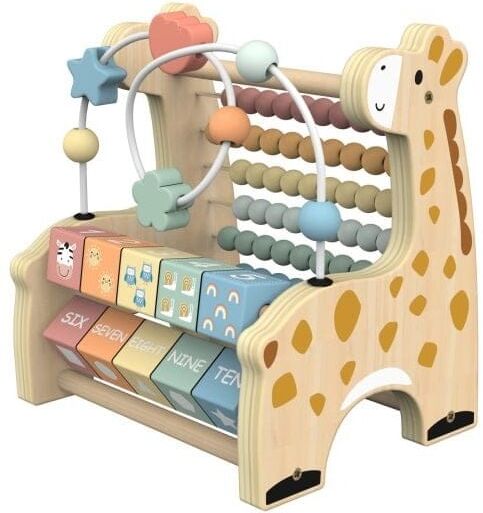
Tooky Toys Wooden Learning Giraffe - Early Education Toy for Babies - Develops Problem-Solving Skills and Hand-Eye CoordinationThe Learning Giraffe is a delightful way for little ones to discover numbers, counting, and colors. Made from smooth, durable wood, this giraffe-shaped learning board combines early education with playful charm. Kids can engage in hands-on activities, such as sliding and stacking numbers, to make math feel approachable and fun. The sturdy, natural materials help develop problem-solving skills and hand-eye coordination. The Learning Giraffe is a gentle guide into the world of numbers, perfect for practicing simple sums and exploring colorful blocks. Tooky Toys has crafted a product that brings the classroom into the playroom in a fun and imaginative way.19,39 £*Shipping: 1,99 £Secure redirect to the provider
-
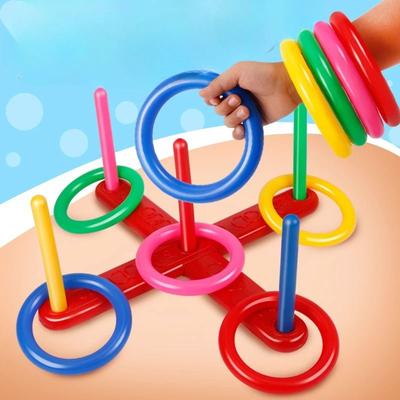
Uplifted Finds Interactive Ring Toss Training System Professional Early Education & Pediatric Fitness Infrastructure Interactive Ring Toss Training System Professional Early Education & Pediatric Fitness InfrastructureCommand ultimate developmental confidence with the Interactive Ring Toss Training System, a highperformance educational solution specifically engineered to act as a comprehensive tool for elite organization and superior technical ergonomics. Built...52,97 $*Shipping: 0,00 $Secure redirect to the provider
-
Tiny Tots Teens Trends Drawer Game Early Education Montessori Wooden Pitch Ball Box Preschool Learning Training Toy Drawer Game Early Education Montessori Wooden Pitch Ball Box Preschool Learning Training ToyThis Montessori Wooden Pitch Ball Box Drawer Game is a thoughtfully designed earlyeducation toy that transforms playtime into purposeful learning. Crafted for toddlers and preschoolers, it offers a handson, engaging way to support key developmental...39,97 $*Shipping: 0,00 $Secure redirect to the provider
-
Tiny Tots Teens Trends Montessori Baby Training, Infant Puzzle Early Education Toys, Busy Hand Grasping Ball For Baby Montessori Baby Training, Infant Puzzle Early Education Toys, Busy Hand Grasping Ball For BabyIntroduce Your Baby to the World of Learning The Infant Puzzle Early Education Toys are designed to foster cognitive and physical development in your little one. This Multifunctional Busy Ball for Montessori Baby Training is ideal for enhancing...79,97 $*Shipping: 0,00 $Secure redirect to the provider
-
What relations are equivalence relations?
Equivalence relations are relations that satisfy three properties: reflexivity, symmetry, and transitivity. Reflexivity means that every element is related to itself. Symmetry means that if one element is related to another, then the other is related to the first. Transitivity means that if one element is related to another and the second element is related to a third, then the first element is related to the third. Relations that satisfy these three properties are considered equivalence relations. Examples of equivalence relations include "is equal to" and "has the same birthday as." **
-
What are Byzantine relations?
Byzantine relations refer to the diplomatic, political, and cultural interactions between the Byzantine Empire and other states or entities. These relations were crucial for the Byzantine Empire's survival and influence, as they involved alliances, treaties, trade agreements, and military cooperation with neighboring powers such as the Roman Empire, Persia, Arab Caliphates, and various European kingdoms. Byzantine relations also involved religious and cultural exchanges, as the Byzantine Empire played a significant role in spreading Christianity and preserving classical knowledge. These relations were often complex and constantly evolving, shaping the empire's foreign policy and its place in the wider world. **
-
What are equivalence relations?
Equivalence relations are a type of relation between elements of a set that satisfy three properties: reflexivity, symmetry, and transitivity. Reflexivity means that every element is related to itself. Symmetry means that if one element is related to another, then the other is related to the first. Transitivity means that if one element is related to a second, and the second is related to a third, then the first is related to the third. Equivalence relations are important in mathematics and other fields because they allow us to classify elements of a set into distinct equivalence classes based on their relationships with each other. **
-
What are real societal relations?
Real societal relations refer to the interactions, connections, and dynamics that exist among individuals, groups, and institutions within a society. These relations are shaped by various factors such as power dynamics, cultural norms, economic structures, and historical contexts. They influence how people relate to each other, how resources are distributed, and how social hierarchies are maintained or challenged. Understanding real societal relations is crucial for analyzing social issues, promoting social justice, and fostering positive social change. **
Similar search terms for Relations
-
Modern Mode Marketplace Brain Response Battle Cup Set Fun Baby Stack Game For Early Education, Speed And HandEye Coordination Training Brain Response Battle Cup Set Fun Baby Stack Game For Early Education, Speed And HandEye Coordination TrainingUnlock your child's potential with the Brain Response Battle Cup Set! Perfect for young learners, this exciting game combines fun and education to develop handeye coordination and response speed. Ideal for babies and toddlers, it helps improve...29,97 $*Shipping: 0,00 $Secure redirect to the provider
-
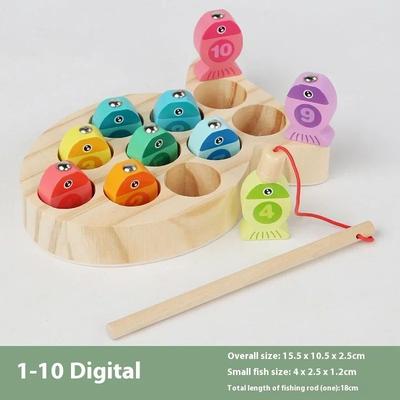
Inspire Select Wooden Montessori Fishing Toy Set Kids Number & Alphabet Learning Game For Early Education Training numbersMake learning fun and interactive with a playful educational experience. This Montessori fishing toy helps children develop essential skills while enjoying handson play. Designed for toddlers and young kids, this wooden learning toy combines...64,96 $*Shipping: 0,00 $Secure redirect to the provider
-
Multisell Products Hub Magnetic Maze Walking Ball, Children's Early Education Puzzle, Baby Concentration And Logic Thinking Training mediumImprove Concentration with Fun Learning: Introducing the Children's Magnetic Maze Walking Ball, an engaging tool that fosters your childs concentration and cognitive skills. This interactive game is designed to help develop logic thinking while...27,97 $*Shipping: 0,00 $Secure redirect to the provider
-
Why are the relations symmetric?
Relations are symmetric when for every pair of elements (a, b) in the relation, if (a, b) is in the relation, then (b, a) is also in the relation. This means that the relation is bidirectional, and both elements are related to each other in the same way. Symmetric relations are important because they represent a balanced and mutual connection between elements, where the relationship between them is not one-sided. This property is useful in various mathematical and real-world applications, such as in modeling social networks, communication systems, and equivalence relations. **
-
What are entities and relations?
Entities are objects or concepts that are distinguishable and can be described. They can be people, places, things, or events. Relations, on the other hand, are connections or associations between entities. They define how entities are related to each other and provide context to their interactions. In a database context, entities are represented as tables and relations are represented as the connections between these tables. **
-
How many relations are there?
The number of relations depends on the context in which the term is being used. In mathematics, a relation between two sets is a collection of ordered pairs, and the number of relations between two finite sets of sizes m and n is 2^(m*n). In a social or personal context, the number of relations could refer to the number of connections or interactions between individuals, which would vary widely depending on the size and complexity of the social network. Therefore, the number of relations can vary greatly depending on the specific context in which the term is being used. **
-
What are order relations mxn?
Order relations mxn are a type of binary relation that is defined on two sets, typically denoted as M and N. In this context, "m" and "n" represent elements of the sets M and N, respectively. The order relation mxn specifies a relationship between elements of M and N, indicating whether one element is less than, equal to, or greater than another. This type of relation is commonly used in mathematics and computer science to compare and order elements of different sets. **
* All prices are inclusive of VAT and, if applicable, plus shipping costs. The offer information is based on the details provided by the respective shop and is updated through automated processes. Real-time updates do not occur, so deviations can occur in individual cases. ** Note: Parts of this content were created by AI.