Buy istitutoaltierospinelli.eu ?
We are moving the project
istitutoaltierospinelli.eu .
Are you interested in purchasing the domain
istitutoaltierospinelli.eu ?
domain@kv-gmbh.de · 0541-91531010
Buy istitutoaltierospinelli.eu ?
Can planetary orbits intersect?
No, planetary orbits cannot intersect. In our solar system, each planet orbits the sun in its own distinct path, and these paths do not cross or intersect. This is due to the gravitational forces between the planets and the sun, which keep their orbits separate and stable. If planetary orbits were to intersect, it would lead to chaotic and unstable interactions between the planets, which is not observed in our solar system. **
Why are there elliptical orbits?
Elliptical orbits occur due to the gravitational forces between celestial bodies. When an object is under the influence of a central force, such as gravity, its path will often take the shape of an ellipse. This is because the force of gravity is stronger at shorter distances, causing the object to move faster when closer to the center of mass and slower when farther away. As a result, the object follows a curved path that is elliptical in shape. **

Similar search terms for Orbits
Top-Angebote
Products related to Orbits:
-
Tiny Tots Teens Trends Drawer Game Early Education Montessori Wooden Pitch Ball Box Preschool Learning Training Toy Drawer Game Early Education Montessori Wooden Pitch Ball Box Preschool Learning Training ToyThis Montessori Wooden Pitch Ball Box Drawer Game is a thoughtfully designed earlyeducation toy that transforms playtime into purposeful learning. Crafted for toddlers and preschoolers, it offers a handson, engaging way to support key developmental...39,97 $*Shipping: 0,00 $Secure redirect to the provider
-
Tiny Tots Teens Trends Montessori Baby Training, Infant Puzzle Early Education Toys, Busy Hand Grasping Ball For Baby Montessori Baby Training, Infant Puzzle Early Education Toys, Busy Hand Grasping Ball For BabyIntroduce Your Baby to the World of Learning The Infant Puzzle Early Education Toys are designed to foster cognitive and physical development in your little one. This Multifunctional Busy Ball for Montessori Baby Training is ideal for enhancing...79,97 $*Shipping: 0,00 $Secure redirect to the provider
-
Modern Mode Marketplace Brain Response Battle Cup Set Fun Baby Stack Game For Early Education, Speed And HandEye Coordination Training Brain Response Battle Cup Set Fun Baby Stack Game For Early Education, Speed And HandEye Coordination TrainingUnlock your child's potential with the Brain Response Battle Cup Set! Perfect for young learners, this exciting game combines fun and education to develop handeye coordination and response speed. Ideal for babies and toddlers, it helps improve...29,97 $*Shipping: 0,00 $Secure redirect to the provider



-
On which orbits do planets move?
Planets move on elliptical orbits around the Sun. These orbits are not perfect circles but slightly elongated, with the Sun located at one of the foci of the ellipse. The gravitational pull of the Sun keeps the planets in their orbits, causing them to move in a predictable path around the Sun. **
-
Why are the planet orbits elliptical?
The planet orbits are elliptical because of the gravitational force exerted by the sun. According to Kepler's laws of planetary motion, planets move in elliptical orbits with the sun at one of the foci. This means that the gravitational force between the sun and the planet causes the planet to move in a curved path, resulting in an elliptical orbit. The shape of the orbit is determined by the balance between the planet's velocity and the gravitational force pulling it towards the sun. **
-
'Between the orbits of the planets.'
The asteroid belt is located between the orbits of Mars and Jupiter. It is a region in our solar system where millions of small rocky bodies, called asteroids, orbit the sun. The asteroid belt is thought to be the remnants of a failed planet formation, as the gravitational pull of Jupiter prevented the material in this region from coalescing into a single planet. The largest asteroid in the belt is Ceres, which is also classified as a dwarf planet. **
-
In which direction do the planetary orbits run?
The planetary orbits run counterclockwise around the Sun when viewed from above the Earth's North Pole. This means that the planets move in the same direction as the Sun's rotation. This counterclockwise motion is known as prograde motion. The planets all orbit the Sun in roughly the same plane, known as the ecliptic plane. **

Why do the planets move in elliptical orbits?
The planets move in elliptical orbits due to the gravitational force exerted by the Sun. According to Kepler's laws of planetary motion, the shape of the orbit is determined by the balance between the gravitational force pulling the planet towards the Sun and the planet's inertia trying to carry it away. This results in an elliptical path rather than a perfect circle. The eccentricity of the orbit determines how elongated or circular it is, with a value of 0 representing a perfect circle and higher values representing more elongated ellipses. **
Who discovered the elliptical orbits of the sun?
The discovery of the elliptical orbits of the sun is credited to the German astronomer Johannes Kepler. In the early 17th century, Kepler formulated his three laws of planetary motion, which described the elliptical paths that planets follow around the sun. These laws revolutionized our understanding of the solar system and laid the foundation for Isaac Newton's law of universal gravitation. **
Top-Angebote
Products related to Orbits:
-
Uplifted Finds Interactive Ring Toss Training System Professional Early Education & Pediatric Fitness Infrastructure Interactive Ring Toss Training System Professional Early Education & Pediatric Fitness InfrastructureCommand ultimate developmental confidence with the Interactive Ring Toss Training System, a highperformance educational solution specifically engineered to act as a comprehensive tool for elite organization and superior technical ergonomics. Built...52,97 $*Shipping: 0,00 $Secure redirect to the provider
-
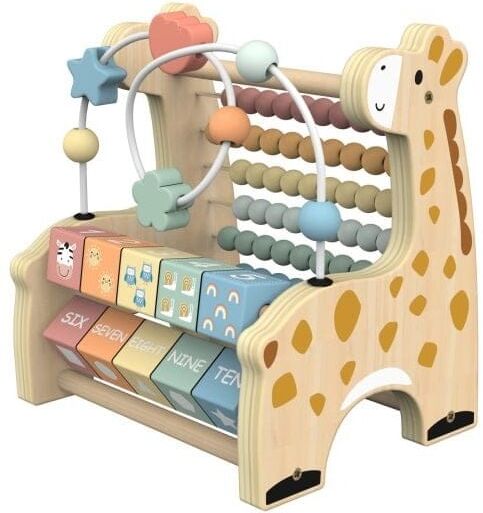
Tooky Toys Wooden Learning Giraffe - Early Education Toy for Babies - Develops Problem-Solving Skills and Hand-Eye CoordinationThe Learning Giraffe is a delightful way for little ones to discover numbers, counting, and colors. Made from smooth, durable wood, this giraffe-shaped learning board combines early education with playful charm. Kids can engage in hands-on activities, such as sliding and stacking numbers, to make math feel approachable and fun. The sturdy, natural materials help develop problem-solving skills and hand-eye coordination. The Learning Giraffe is a gentle guide into the world of numbers, perfect for practicing simple sums and exploring colorful blocks. Tooky Toys has crafted a product that brings the classroom into the playroom in a fun and imaginative way.19,45 £*Shipping: 3,95 £Secure redirect to the provider
-
Tiny Tots Teens Trends Drawer Game Early Education Montessori Wooden Pitch Ball Box Preschool Learning Training Toy Drawer Game Early Education Montessori Wooden Pitch Ball Box Preschool Learning Training ToyThis Montessori Wooden Pitch Ball Box Drawer Game is a thoughtfully designed earlyeducation toy that transforms playtime into purposeful learning. Crafted for toddlers and preschoolers, it offers a handson, engaging way to support key developmental...39,97 $*Shipping: 0,00 $Secure redirect to the provider
-
Tiny Tots Teens Trends Montessori Baby Training, Infant Puzzle Early Education Toys, Busy Hand Grasping Ball For Baby Montessori Baby Training, Infant Puzzle Early Education Toys, Busy Hand Grasping Ball For BabyIntroduce Your Baby to the World of Learning The Infant Puzzle Early Education Toys are designed to foster cognitive and physical development in your little one. This Multifunctional Busy Ball for Montessori Baby Training is ideal for enhancing...79,97 $*Shipping: 0,00 $Secure redirect to the provider
-
Can planetary orbits intersect?
No, planetary orbits cannot intersect. In our solar system, each planet orbits the sun in its own distinct path, and these paths do not cross or intersect. This is due to the gravitational forces between the planets and the sun, which keep their orbits separate and stable. If planetary orbits were to intersect, it would lead to chaotic and unstable interactions between the planets, which is not observed in our solar system. **
-
Why are there elliptical orbits?
Elliptical orbits occur due to the gravitational forces between celestial bodies. When an object is under the influence of a central force, such as gravity, its path will often take the shape of an ellipse. This is because the force of gravity is stronger at shorter distances, causing the object to move faster when closer to the center of mass and slower when farther away. As a result, the object follows a curved path that is elliptical in shape. **
-
On which orbits do planets move?
Planets move on elliptical orbits around the Sun. These orbits are not perfect circles but slightly elongated, with the Sun located at one of the foci of the ellipse. The gravitational pull of the Sun keeps the planets in their orbits, causing them to move in a predictable path around the Sun. **
-
Why are the planet orbits elliptical?
The planet orbits are elliptical because of the gravitational force exerted by the sun. According to Kepler's laws of planetary motion, planets move in elliptical orbits with the sun at one of the foci. This means that the gravitational force between the sun and the planet causes the planet to move in a curved path, resulting in an elliptical orbit. The shape of the orbit is determined by the balance between the planet's velocity and the gravitational force pulling it towards the sun. **
Similar search terms for Orbits
-
Modern Mode Marketplace Brain Response Battle Cup Set Fun Baby Stack Game For Early Education, Speed And HandEye Coordination Training Brain Response Battle Cup Set Fun Baby Stack Game For Early Education, Speed And HandEye Coordination TrainingUnlock your child's potential with the Brain Response Battle Cup Set! Perfect for young learners, this exciting game combines fun and education to develop handeye coordination and response speed. Ideal for babies and toddlers, it helps improve...29,97 $*Shipping: 0,00 $Secure redirect to the provider
-
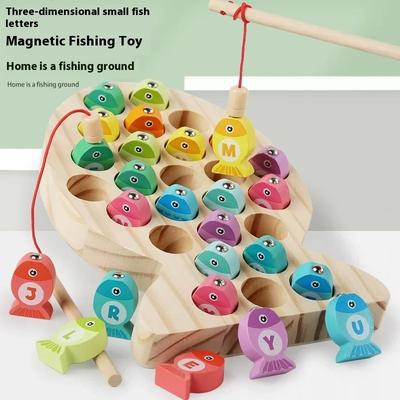
Inspire Select Wooden Montessori Fishing Toy Set Kids Number & Alphabet Learning Game For Early Education Training lettersMake learning fun and interactive with a playful educational experience. This Montessori fishing toy helps children develop essential skills while enjoying handson play. Designed for toddlers and young kids, this wooden learning toy combines...96,97 $*Shipping: 0,00 $Secure redirect to the provider
-
Multisell Products Hub Magnetic Maze Walking Ball, Children's Early Education Puzzle, Baby Concentration And Logic Thinking Training mediumImprove Concentration with Fun Learning: Introducing the Children's Magnetic Maze Walking Ball, an engaging tool that fosters your childs concentration and cognitive skills. This interactive game is designed to help develop logic thinking while...27,97 $*Shipping: 0,00 $Secure redirect to the provider
-
'Between the orbits of the planets.'
The asteroid belt is located between the orbits of Mars and Jupiter. It is a region in our solar system where millions of small rocky bodies, called asteroids, orbit the sun. The asteroid belt is thought to be the remnants of a failed planet formation, as the gravitational pull of Jupiter prevented the material in this region from coalescing into a single planet. The largest asteroid in the belt is Ceres, which is also classified as a dwarf planet. **
-
In which direction do the planetary orbits run?
The planetary orbits run counterclockwise around the Sun when viewed from above the Earth's North Pole. This means that the planets move in the same direction as the Sun's rotation. This counterclockwise motion is known as prograde motion. The planets all orbit the Sun in roughly the same plane, known as the ecliptic plane. **
-
Why do the planets move in elliptical orbits?
The planets move in elliptical orbits due to the gravitational force exerted by the Sun. According to Kepler's laws of planetary motion, the shape of the orbit is determined by the balance between the gravitational force pulling the planet towards the Sun and the planet's inertia trying to carry it away. This results in an elliptical path rather than a perfect circle. The eccentricity of the orbit determines how elongated or circular it is, with a value of 0 representing a perfect circle and higher values representing more elongated ellipses. **
-
Who discovered the elliptical orbits of the sun?
The discovery of the elliptical orbits of the sun is credited to the German astronomer Johannes Kepler. In the early 17th century, Kepler formulated his three laws of planetary motion, which described the elliptical paths that planets follow around the sun. These laws revolutionized our understanding of the solar system and laid the foundation for Isaac Newton's law of universal gravitation. **
* All prices are inclusive of VAT and, if applicable, plus shipping costs. The offer information is based on the details provided by the respective shop and is updated through automated processes. Real-time updates do not occur, so deviations can occur in individual cases. ** Note: Parts of this content were created by AI.